Biotech Strategy & Decision Intelligence

Decision Intelligence for Biotech

A connected series of thinking frameworks for making high-stakes decisions in early-stage biotech, where information is incomplete, mistakes compound, and the science itself can say no. It moves from classifying what kind of problem you face (Cynefin), to extracting honest signal from siloed experts (triangulation), to naming the two mechanisms that quietly kill platforms at the intersections between domains, to fusing it all into an operational circuit (STMC) for the day the plan breaks. The throughline: the failures that sink biotech companies hide in the gaps between disciplines — and structured sensemaking is what makes those gaps visible before they become irreversible.

Cynefin sensemaking framework applied to biotech decisions

Cynefin: the decision framework that asks “what kind of problem is this?” before “what should I do?”

Most biotech failures aren't bad science — they're the wrong decision framework applied to the right problem. Optimising a buffer, debugging a manufacturing deviation, navigating a platform pivot, and managing a clinical hold are four different kinds of problem, and the approach that works for one is actively destructive for another.

This piece introduces Cynefin, the Welsh-named sensemaking framework (used by the US military, the European Commission, and Harvard Business Review) that remains almost unknown in life sciences. It walks through its five domains — Clear, Complicated, Complex, Chaotic, and Disorder — with concrete biotech failure modes like treating Complex as Complicated, and is honest about where the framework falls short: subjective classification, the blurry Complicated/Complex boundary, and its inability to track how decisions compound over time.

Read how Cynefin reframes biotech decisions Photon Fusion · Substack

Triangulation across science, IP, manufacturing and market in biotech

Why Triangulation Works in Ambiguous Territory.

The standard move when navigating an early-stage platform is to find the best expert and trust them. But even genuine experts carry hidden assumptions and blind spots — a single source gives you their map, not the territory.

This piece argues that triangulation changes the structure of the problem. Instead of asking “what's the right answer,” you ask where independent sources converge and where they diverge — and in platform biotech, the inconsistencies between the science, IP, manufacturing, and market silos aren't noise. They're the exact spots where fragility gets built in, often without the founder noticing. The real payoff: ambiguity never fully disappears, but triangulation converts unstructured uncertainty into mapped uncertainty.

Read why triangulation maps the uncertainty Photon Fusion · Substack
Compounding unpredictability and path foreclosure in platform biotech

Cross-Domain Look: the mechanisms that kill biotech platforms hide at the joints, not the steel.

A company raises $50M in Series B. The science is novel, the market real, the team strong. It still fails. Why?

This piece argues that most platform biotech failures are driven by two distinct, coupled mechanisms that live between disciplines rather than inside any one of them. The first is compounding unpredictability — the butterfly effect, properly understood — where small, reasonable early decisions interact across technical, IP, and commercial domains until the consequences are visible but the causal chain is no longer reconstructable. The second is path foreclosure — path dependency — where a decision doesn't just shape the future but quietly eliminates futures, until going back is no longer an option. One is a failure of visibility; the other, a change in what's possible. Using an anonymised chip-based synthesis case, it shows how the two reinforce each other — and ends with three questions worth asking before the window closes.

Read where platform failures actually hide Photon Fusion · Substack
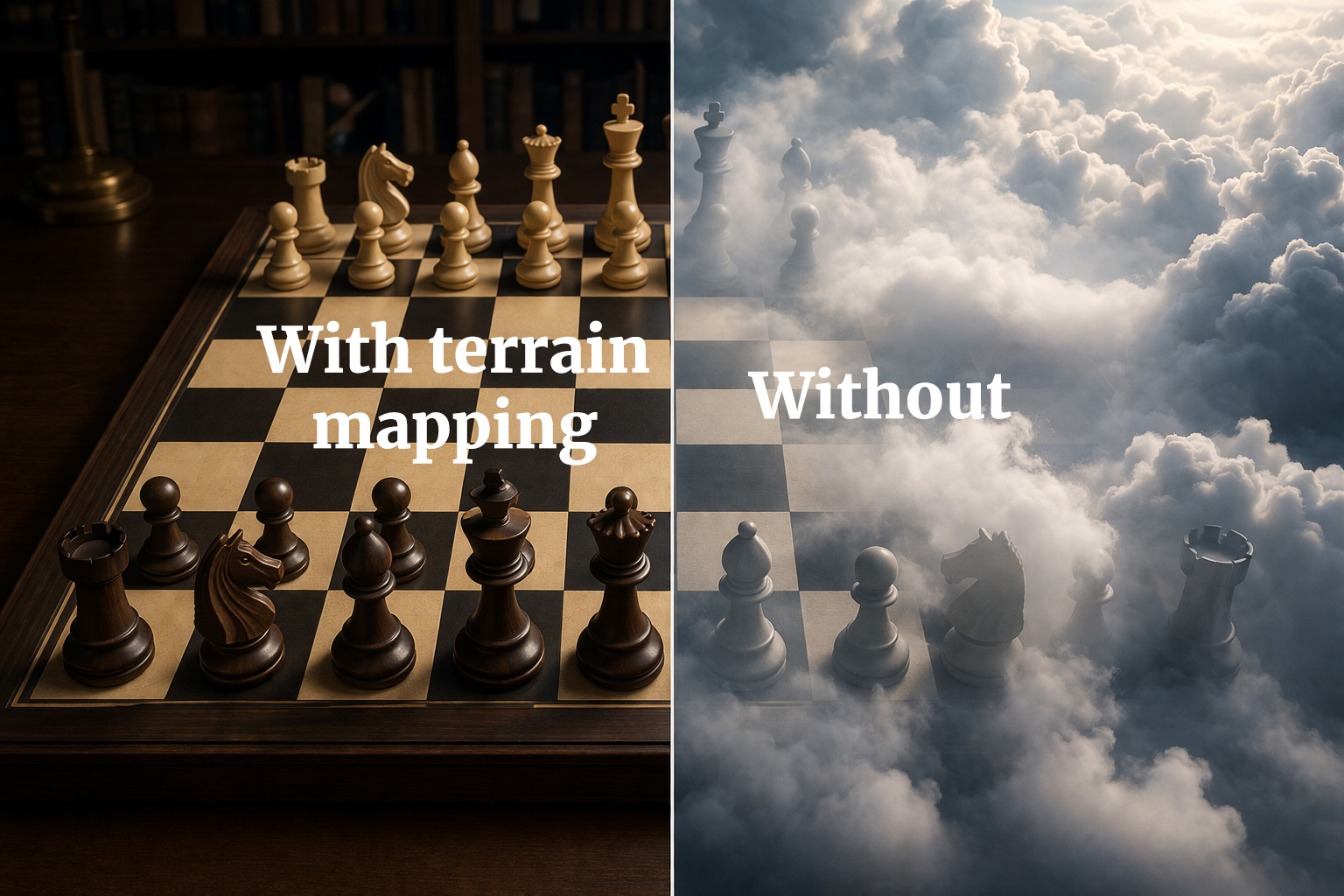
Synthetic Terrain Mapping Circuit (STMC) for biotech strategy

The Board You Cannot See: a strategic playbook for the day biotech plans collapse.

It's a sunny Tuesday morning. A competitor's patent has just landed mid-fundraise, and a Series A CEO's expansion programme — and Series B story — may be gone by Friday. What do you actually do in the first ten minutes?

This piece walks through that scenario to introduce the Synthetic Terrain Mapping Circuit (STMC): a fusion of Cynefin, military Battle Damage Assessment, Intelligence Preparation of the Battlefield, and a reoriented Wardley map. The argument is that biotech breaks the standard strategy frameworks because its assumptions can fail at the level of biological reality itself — and that the decisions that sink companies hide at the intersections of the maps, not inside any single one.

Read the STMC strategic playbook Explore the interactive STMC framework → Photon Fusion · Substack

Contrarian Signals

Timely, evidence-led commentary on reading the current environment and acting against the herd. Where the consensus retreats — slashing R&D in a downturn, or wiring expensive autonomous agents into every workflow — these pieces argue the asymmetric advantage lies in the opposite, disciplined move: investing into the downturn to capture displaced talent and uncontested IP, or governing AI with a guardian layer rather than chasing a faster engine. The shared thesis is that the costly errors are the ones that feel safe at the time, and that the real edge comes from extracting the most signal per unit of scarce resource — whether that resource is runway or tokens.

Agentic AI token economics and the guardian layer

Futile Cycles: Why Agentic AI Burns Money Going Nowhere.

The promise was simple: intelligence on tap, labour without headcount, agents that never sleep. The bill tells a different story. In Q1 2026 OpenAI's Sam Altman conceded token costs had become “a huge issue,” with clients burning a full year's budget in a quarter — and an Nvidia executive has admitted AI is now, in some contexts, more expensive than the human workers it was meant to replace.

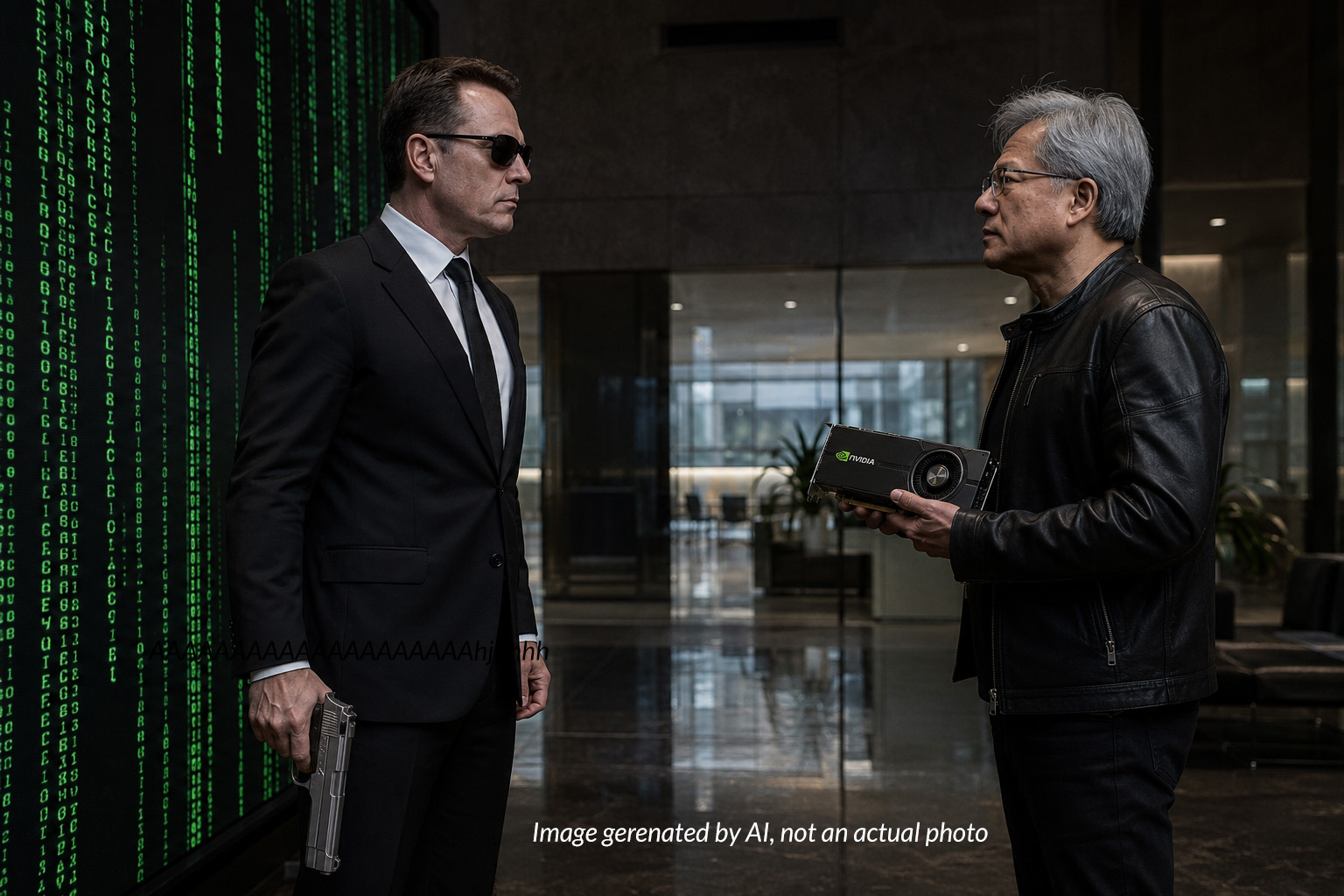
This piece argues the crisis is architectural, not inevitable. Agentic loops can consume up to a thousand times the tokens of a single exchange, and most of that burn isn't the cost of thinking — it's the cost of remembering badly. Agents are structurally amnesiac, re-deriving what they settled moments ago. The fix isn't more AI or less AI but governed AI: a guardian layer that persists state, delegates cleanly, and knows when to stop. Nvidia's Nemotron 3 Ultra is a faster engine — but a faster engine is not a driver. Framed throughout by a very impatient Agent Smith, and sharpened for the capital-constrained biotech founder whose runway the burn quietly eats.

Read why agentic AI burns money Photon Fusion · Substack · 6 June 2026
Countercyclical biotech investment during a downturn

Be Greedy When Others Are Fearful — In Biotech, Not Just Stocks.

Warren Buffett's maxim was coined for investing, but it maps onto biotech strategy with uncomfortable precision — and the current moment makes the case better than any thought experiment.

When a downturn hits, most biotech companies flip into survival mode: cut research, freeze hiring, shelve early-stage innovation, report runway as a core metric, and wait. A smaller number do the opposite — hiring the scientists competitors just let go, filing patents into suddenly uncontested space, and buying every input at a discount. When the cycle turns, the cutters spend 12–18 months rebuilding while the investors are already executing.

This piece explains why the countercyclical approach works, why almost nobody does it (board psychology, asymmetric accountability, debt aversion), and why the 2026 setup is textbook: NIH funding throttled administratively despite Congress preserving it, collapsing PhD admissions, and a multi-year industry layoff wave displacing exactly the talent the brave companies should be absorbing now.

Read the case for countercyclical biotech Photon Fusion · Substack · 12 April 2026